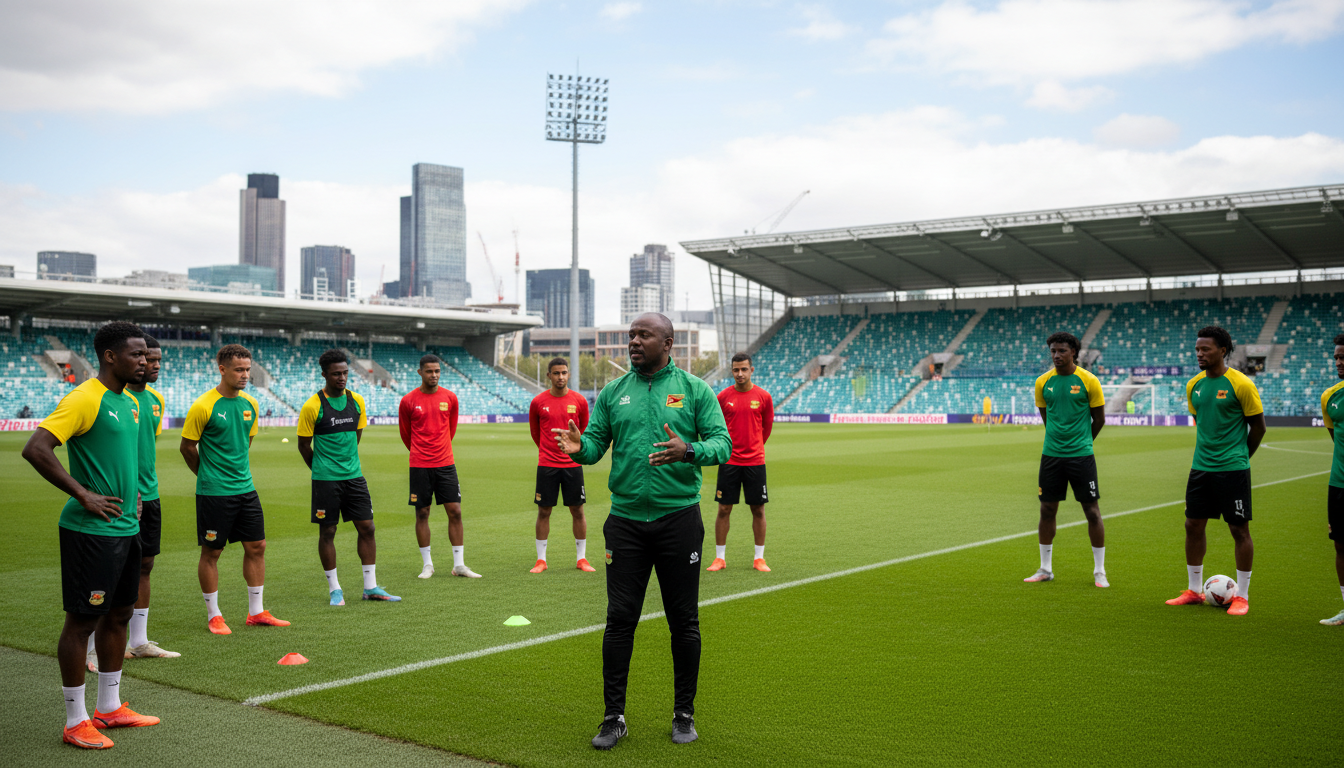
Kaitano Tembo named interim head coach as Zimbabwe Warriors prepare for Unity Cup in London
Kaitano Tembo named Zimbabwe Warriors interim head coach as the team heads to the Unity Cup in London; he stresses continuity, unity and strong preparation.


Kaitano Tembo has been appointed interim head coach of the Zimbabwe national team, the Warriors, as the side prepares to compete in the Unity Cup in London. The appointment, confirmed by the Zimbabwe Football Association, places Tembo in charge at a pivotal moment ahead of competitive matches against Nigeria, Jamaica and India. He will lead the team alongside assistant coach Takesure Chiragwi and has prioritized unity, continuity and a disciplined approach as immediate goals.
Mandate and expectations from the Zimbabwe Football Association
Tembo steps into the role with a clear short-term mandate to steady the team and prepare it for high-calibre fixtures in the United Kingdom. ZIFA signalled that the appointment is interim but entrusted him with full responsibility for selection, preparation and match-day management for the Unity Cup. The federation framed the decision as one that balances continuity with the need to present a competitive side on foreign soil.
The coach described the role as an honour and a responsibility, thanking ZIFA for its confidence and committing to build on the work of previous staff. His charge is to ensure the Warriors arrive in London organised and mentally prepared, with players understanding their roles. The immediate expectation is pragmatic: deliver a cohesive performance and use the tournament as a platform to evaluate the squad.
Observers see the move as low-risk and practical, given Tembo’s familiarity with the set-up and players. By selecting an internal candidate, ZIFA has prioritised stability over wholesale change just weeks before the Unity Cup. That context frames Tembo’s priorities: maintain what works and shore up areas that need sharper organisation.
Continuity from within the technical team
Tembo’s appointment draws directly on his time as an assistant under Marian Marinica and Michael Nees, a background he says gives him an advantage. He knows the domestic players, those plying their trade in neighbouring South Africa and the professionals abroad, and has been involved in the tactical discussions and training plans that preceded his elevation. That institutional memory reduces the time needed to implement changes.
The new interim coach emphasised continuity as essential to minimise disruption ahead of a short preparation window. He intends to preserve the structures and methods already familiar to the playing group while making targeted adjustments where necessary. Tembo’s familiarity with the squad’s culture is intended to allow seamless communication and quick reinforcement of collective aims.
For administrators and players, the move offers reassurance that the transition will be managed internally and professionally. The coaching continuity is designed to protect the team’s competitive rhythm and to give emerging players an environment of predictable expectations.
Unity Cup in London marks first UK appearance and a test of quality
The Unity Cup represents the Warriors’ first campaign on UK soil, a milestone the coaching team has framed as both symbolic and competitive. Drawn to face Nigeria in a semi-final along with Jamaica and India in the tournament path, Zimbabwe will measure itself against opponents with varying styles and strengths. The fixtures are being treated as meaningful friendlies that will reveal both tactical resilience and squad depth.
Tembo has described opponents such as Nigeria as high-quality teams that demand respect and meticulous preparation. He has set a tone of cautious optimism, underlining that the team must be organised and disciplined to deliver credible performances. The Unity Cup will provide the technical staff with a chance to test combinations and to judge how players respond under pressure away from home.
Beyond the on-field challenge, the London setting has substantial off-field significance. The tournament offers exposure to different climates and stadium conditions, and it also presents a rare opportunity to engage Zimbabweans living in the UK. The coaching staff view the tournament as an occasion to build the team’s international profile.
Tactical priorities and squad composition
Tembo’s immediate tactical brief focuses on organisation, defensive discipline and clear role definition across the spine of the team. He has indicated that preparation will emphasise players understanding their responsibilities rather than wholesale stylistic change. That approach reflects practical limits on training time and the need to ready players for opponents with distinct tactical profiles.
The squad available to Tembo comprises a blend of home-based talent, players in the South African leagues and a handful based in the United Kingdom and elsewhere. The coaching staff have highlighted this mix as an asset, offering a range of physical profiles and experiences. The task for Tembo and his assistants will be to integrate those differences into a coherent game plan that can be executed on match day.
Selection decisions are expected to balance form with the need for tactical fit and squad balance. While the Unity Cup is non-competitive in the context of qualifiers, it will be treated as a high-intensity rehearsal that can shape selection thinking for upcoming competitive windows. Tembo has signalled an intent to use the tournament to evaluate players’ adaptability and mental readiness.
Partnership with Takesure Chiragwi and technical cohesion
Tembo has reappointed Takesure Chiragwi as his assistant, restoring a partnership that both men say is rooted in mutual understanding and prior collaboration. The duo have worked together in the national set-up before, and Tembo stressed that their cohesion will help streamline training, communication and match-night decision-making. That internal alignment is intended to reduce friction and present clear leadership to the players.
Chiragwi’s role will encompass hands-on coaching at training sessions, tactical briefings and liaising with players about roles and expectations. Tembo has emphasised that clear delegation within the technical team is essential, especially with limited preparation time before competitive fixtures. Both coaches aim to create a stable environment where players receive consistent messages.
From a management perspective, the reunited coaching pair offers continuity in methodology and personality. The staff’s shared history gives them a common language for addressing tactical shortcomings and reinforcing standards, which Tembo believes will be vital in delivering disciplined performances in London.
Appeal to the diaspora and the national significance of the tour
Tembo made a direct call for Zimbabweans in the UK to turn out and support the Warriors, framing the tournament as a chance to demonstrate national pride abroad. He believes that a strong travelling support can lift the players and create an intimidating atmosphere for opponents. The appeal is both practical and symbolic, aiming to unite the diaspora around a shared sporting moment.
The coaching staff have underlined the cultural importance of the tour for Zimbabwe’s football profile, arguing that positive results and spirited performances can attract attention to the national programme. The Unity Cup is being positioned as an opportunity to showcase homegrown talent and to strengthen relationships with the diaspora community. That outreach is part of a broader strategy to build support networks for players based overseas.
Officials expect travel logistics, ticketing and community organisation to be mobilised ahead of match days so that supporters can gather visibly and loudly. Tembo’s message is straightforward: the team needs the backing of its people and will respond to energetic support with commitment on the pitch.
Zimbabwe Football Association communications confirmed the appointment and the team’s itinerary, while noting that the coaching staff will use the Unity Cup to assess both tactical frameworks and individual performances. ZIFA framed the tour as a development step that aligns with longer-term plans to rebuild the team’s competitiveness.
The Warriors face a compact schedule and high expectations, but the federation and coaching staff have emphasised a measured approach that prioritises preparation, unity and evaluation. Tembo’s interim role is clear: steady the ship, show organisational gains and return a team that can be built on in the seasons to come.