Paddy Dwyer and the UCD football tour China 1976: Ireland students became the first Western team to play in post-Cultural Revolution China
Paddy Dwyer’s UCD football tour China 1976 revisited: the first Western team in China after the Cultural Revolution drew huge crowds and left a sporting legacy.


The UCD football tour China 1976 remains one of the most striking episodes in sport-diplomacy, when an 18-year-old Paddy Dwyer captained University College Dublin on a groundbreaking visit to a country emerging from the Cultural Revolution. The arrival of the Irish students provoked scenes of intense curiosity as crowds ran alongside their bus and lined streets to glimpse Western visitors. That tour, composed of university players rather than professional stars, offered a rare public encounter between Chinese citizens and Western athletes at a pivotal moment in the country’s modernisation.
Historic arrival and public reaction
When the UCD contingent stepped off their flight in 1976, their reception was immediate and overwhelming. Locals sought a first sight of white faces, many running to keep pace with the team bus; the players later recalled lines of people pressed close to vehicles and stadium gates. The images of bicycles filling the streets and almost no cars visible framed for the visitors a China that was about to undergo profound economic and social change.
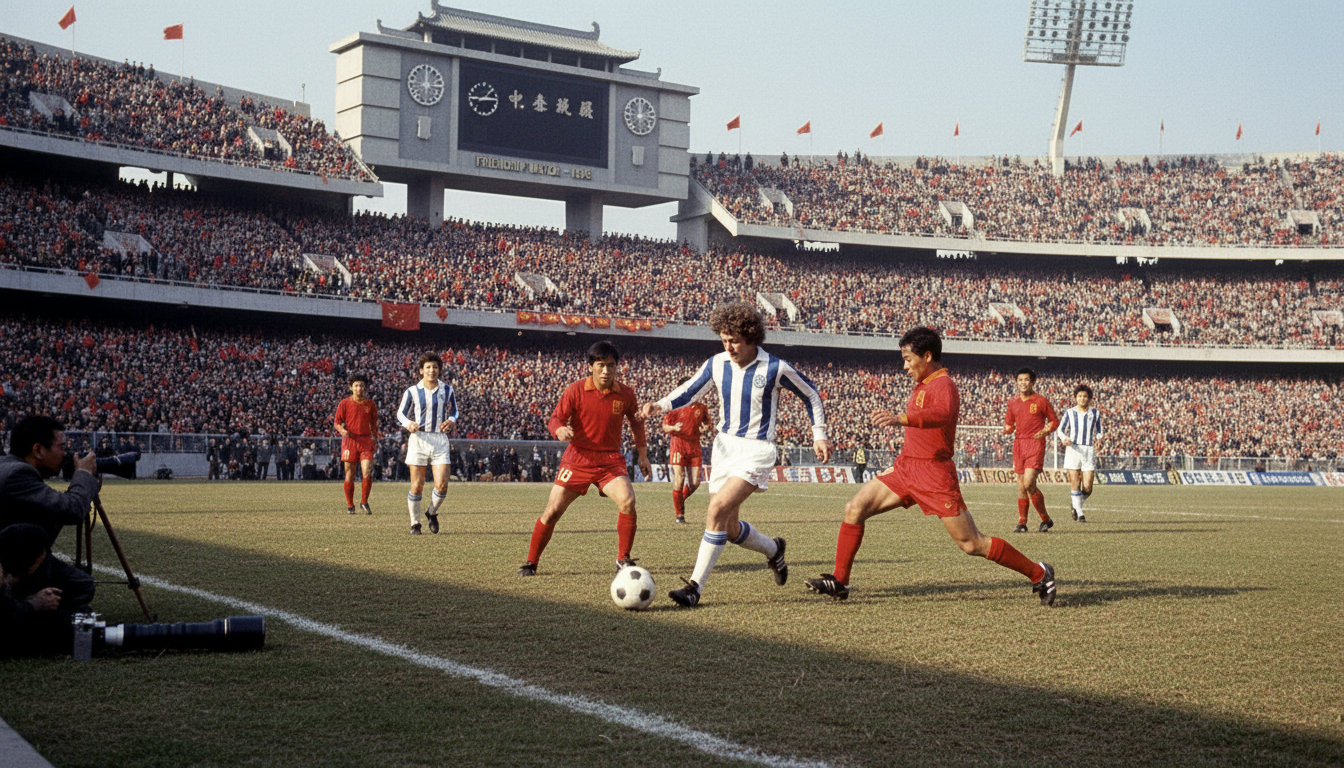
The public fascination extended into the stadiums where matches were played, with spectators eager to witness the unfamiliar style and kit of a Western football team. Organisers from the Chinese Football Association had arranged fixtures across several cities, providing a structured itinerary while ensuring large local attendance. For many Chinese fans, the matches represented their earliest close-up view of foreign footballers and foreign sporting culture.
Team composition and itinerary
The squad was not a professional side but a university team from Dublin, led by Dwyer, who was 18 at the time and appointed captain for the tour. Players combined academic commitments with the opportunity to represent UCD abroad, reflecting an era when sport tours often mixed cultural exchange with competition. The schedule included matches arranged by the Chinese Football Association, spanning multiple locations to maximise public exposure.
Matches were organised in line with broader diplomatic and cultural aims, allowing the hosts to showcase hospitality while allowing the visitors to experience Chinese society beyond capital cities. Travel between venues involved long bus journeys where players encountered the daily life of Chinese citizens, from cyclists lining roads to the sparse automobile traffic. These journeys, as much as the matches, formed a central element of the tour’s narrative for participants.
Encounters on and off the pitch
On the pitch, UCD’s players found themselves adapting to different playing conditions and local interpretations of the game, while maintaining the amateur spirit that characterised their squad. The matches tested the visitors physically and culturally, with players adjusting to varying surfaces, hospitality customs and the intensity of local support. For spectators, the spectacle was as much about human connection as it was about goals, with applause and curiosity blending into a memorable atmosphere.
Off the pitch, team members described nights spent observing city life and engaging with hosts tasked with facilitating their stay. Those interactions offered Irish students an immediate window into a society in transition, where daily routines and public spaces still bore traces of the Cultural Revolution. Meals, exchanges with local officials and visits to public spaces helped the team understand the social fabric behind what they saw from the bus windows and the stadium terraces.
China’s context in 1976 and the tour’s timing
The visit coincided with a fraught and transformative period in Chinese history, as the country was concluding the decade of the Cultural Revolution and beginning tentative steps toward opening and reform. For many Chinese citizens, the sight of Western visitors was rare and significant, arriving at a moment when international engagement was accelerating. The tour therefore had resonance beyond sport, entering the domain of cultural diplomacy at a moment when China’s global posture was changing.
Officials who arranged the fixtures saw an opportunity to present a controlled and positive image, while domestic audiences experienced the novelty of foreign visitors in public life. The UCD tour thus intersected with broader state efforts to manage external perceptions and to expose segments of the population to foreign culture. That intersection made each match and public appearance politically meaningful as well as socially significant.
Personal recollections and lasting impressions
Paddy Dwyer and his teammates recalled the visceral scenes of welcome that met them on arrival, from crowds running beside the bus to waves of spectators in stadiums. Dwyer later reflected on how visible the differences were: the prevalence of bicycles, the rarity of cars, and the intensity of curiosity directed at the visitors. Those impressions stayed with players as enduring memories of a tour that transcended conventional sporting exchange.
For the players themselves, the experience provided formative lessons in travel, cultural sensitivity and the power of sport to bridge vast social divides. Many of the team returned to Ireland with stories that contrasted sharply with the experience of domestic football, bringing back accounts of formal receptions, local hospitality and the simple human interactions that defined the visit. The tour therefore acted as a personal and collective milestone for those involved.
Legacy for football and cultural exchange
The tour’s significance extends to contemporary assessments of sport as a tool for international engagement, especially in moments when political barriers begin to soften. The UCD football tour China 1976 is cited in oral histories and personal memoirs as an early example of grassroots sporting diplomacy that complemented later, more formal exchanges. Its legacy is not measured in trophies but in the relationships and shared memories it created between two very different communities.
Subsequent decades saw far greater flows of teams, athletes and spectators between Ireland and China, and the early visibility provided by that UCD visit helped normalise the idea of sporting interaction. For Chinese football fans and officials, the match-ups offered reference points for improving domestic standards and for understanding foreign styles of play. For Irish participants, the tour became a touchstone of adventurous international engagement during their formative years.
The visits also underscored how sporting tours can illuminate broader societal shifts, with seemingly small details — the number of cars, the composition of crowds, the hospitality arrangements — serving as visible markers of change. As China moved toward economic reform and expanded international connections, the encounters staged in stadiums across the country became microcosms of a larger transformation.
The UCD football tour China 1976 remains a vivid chapter in the history of sport and diplomacy, remembered for its dramatic welcome, the curiosity of spectators and the human stories that emerged from a brief but consequential visit. The players returned home carrying impressions of a country on the cusp of change, and the matches they played linger in recollection as a testament to the capacity of football to open doors across cultures and political divides.