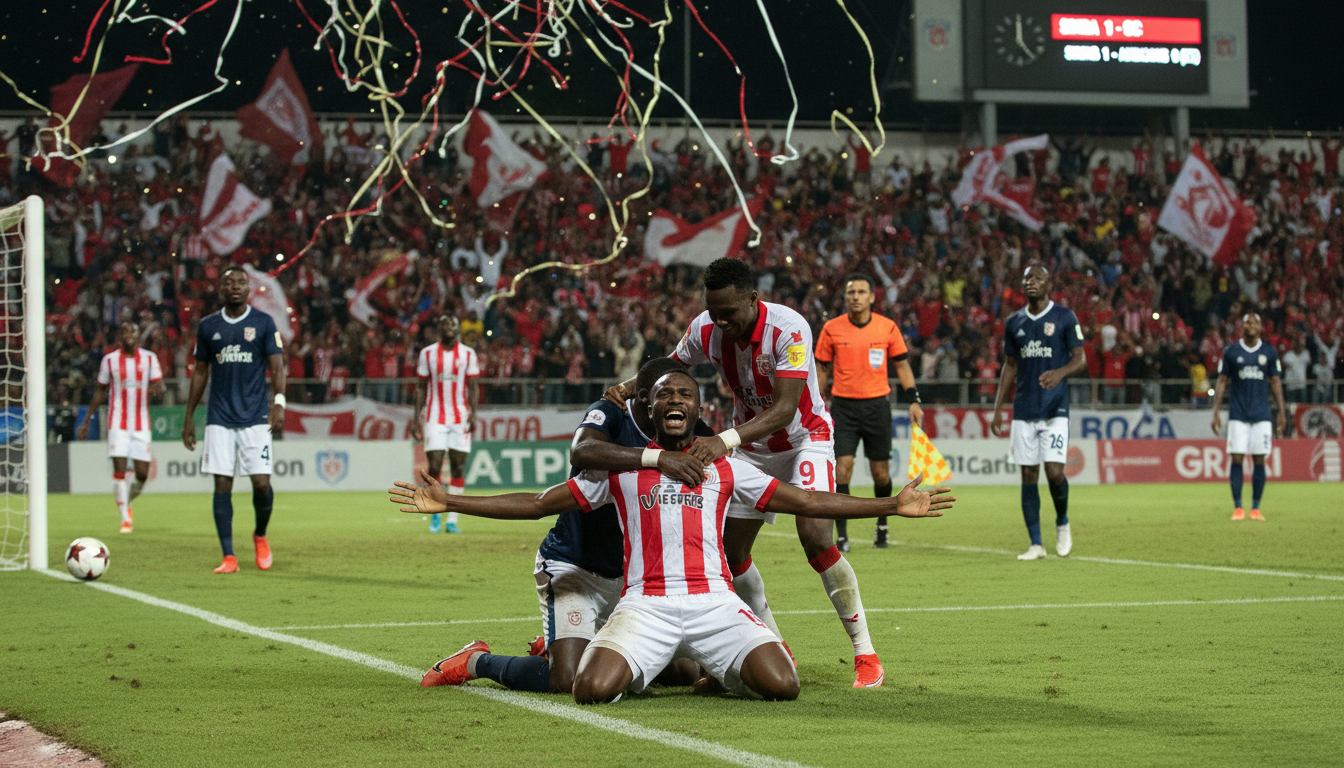
Simba clinch Union Cup final as Selemani Mwalimu converts extra-time penalty
Simba edged Young Africans in a tense Union Cup final as Selemani Mwalimu’s extra-time penalty settled a match defined by a relentless midfield struggle and contentious refereeing.


Simba SC defeated Young Africans SC in a tightly contested Union Cup final decided deep into extra time when Selemani Mwalimu calmly converted a penalty that split two defensive teams. The fixture produced few clear chances and was largely contested in midfield, where Mohammed Damaro and Yusufu Kagoma set a combative tone that impeded sustained attacking play. The result levels the rivalry on seven Union Cup titles apiece and underlined how small incidents, rather than extended patterns of play, can determine a major final.
Simba secure Union Cup final win with extra-time penalty
The decisive moment arrived in the latter stages of extra time when Clatous Chama’s run into the area prompted a mistimed challenge by Edmund John and the referee pointed to the spot. Selemani Mwalimu, who had been a consistent source of goals throughout Simba’s run, stepped up and sent Djigui Diarra the wrong way to give Simba the lead. That single strike ended a match that had offered few clear openings and turned a contest of attrition into a trophy-winning act.
Simba’s winning penalty carried additional narrative weight because Mwalimu had scored in each prior round of the tournament, turning his late kick into the culmination of a campaign defined by timely contributions. The goal was clinical and unflinching in a game that otherwise lacked sustained attacking rhythms, and it illustrated how decisive execution can be decisive when openings are rare. In the aftermath, players and coaches acknowledged the fine margins that separated the two clubs in a fixture shaped as much by denial as by creation.
Contrasting routes: Simba’s patience and Young Africans’ early urgency
The paths that brought the two sides to the final were instructive about their differing approaches. Simba’s campaign displayed a pattern of measured starts that intensified after the interval, with every goal they scored in the knockout rounds arriving in the second half. Steve Barker’s side often opted for a cautious opening phase, introducing familiar starters later in matches and relying on structure to create decisive moments.
By contrast, Young Africans frequently asserted control early in their games, producing rapid openings and building comfortable margins before halftime. Their victories against Mwembe Makumbi City and Azam demonstrated a preference for fast, early pressure and rapid conversion of chances. That contrast in tempo—Simba’s delayed incision versus Young Africans’ early decisiveness—set up an intriguing tactical clash that the final ultimately neutralised.
Midfield duel between Mohammed Damaro and Yusufu Kagoma determined tempo
The most important battle of the final occurred away from either penalty area in the congested central third, where Mohammed Damaro and Yusufu Kagoma repeatedly intercepted attempts to build momentum. Their engagement denied both teams the space required to string passes into threatening sequences and forced attacks to begin again from deeper positions. Rather than acting as simple conduits for transition, the midfield pair controlled rhythm and absorbed the match’s tension.
Because the central duel interrupted progression at frequent intervals, moving the ball through midfield demanded persistence rather than cleverness. Every forward pass was contested quickly, and the frequency of duels meant players had to manage fatigue as well as tactical responsibility. The midfield stranglehold turned the game into a series of fragmented exchanges, magnifying the importance of any single attacking move that did break through the compact shape.
Key defensive interventions and the few chances that mattered
Moments of individual defensive quality defined many of the game’s best sequences, with Yao Kouassi’s timely challenge denying Ancient Oura a clear opportunity in the 19th minute. Those interventions were not spectacular in isolation but were pivotal in the match’s context because clear-cut chances remained scarce throughout the ninety minutes and into extra time. Defenders on both sides frequently arrived in numbers to close spaces and block potential shots.
Opportunities that did emerge demanded finishing precision and composure from attackers who had few rehearsals under pressure. Maxi Nzengeli produced a low volley that required a composed save from Mahamadou Djibrilla Kassali, while Laurindo Aurélio found space late in the second half only to pull his finish wide. Each of those moments altered momentum briefly, and their failure to convert left the contest poised on a knife-edge until the penalty finally produced a resolution.
Refereeing choices shaped the match’s physical character
The match carried an unusually high volume of personal contact, with more than forty fouls recorded and the Kenyan referee, Dickens Nyagrowa, issuing only a single yellow card to Prince Dube. That disciplinary approach effectively raised the threshold for caution and allowed intense, repeated physical engagements in midfield to continue largely unchecked. Players adapted to the referee’s tolerance, engaging robustly in duels that might have drawn stronger sanctions under a stricter interpretation.
By allowing the contest to proceed with minimal formal reprimand, the officiating shaped both the tempo and tactics on display. Managers and players had to contend with a game where the physical contest became embedded in the rhythm rather than punctuating it. The result was a match in which contact functioned as an accepted element of play, complicating attempts to construct sustained attacking phases and increasing the value of individual defensive discipline.
Awards, rivalry and the wider implications of the result
Beyond the single decisive strike, the final delivered several individual recognitions that reflected performances across the competition. Steve Barker was named best coach for his structured progression and in-game management, while Selemani Mwalimu earned the golden boot with goals in separate rounds including the final’s penalty. Rushine De Reuck secured the most valuable player award for his influential defensive and transitional contributions, and Hussein Mbegu was acknowledged as the tournament’s best young player.
The trophy also had symbolic significance for the long-standing rivalry between Simba and Young Africans, moving both clubs level on seven Union Cup titles apiece. That parity reinforces the tightness of domestic competition and the enduring stakes whenever the two meet in cup or league fixtures. For Simba, the victory validated a patient, structure-first approach; for Young Africans, the narrow defeat underlined how execution in rare decisive moments remains the difference in finals.
The Union Cup final was not settled through an extended spell of dominance by either side but by a single moment of execution within a match of continuous interruption. That penalty, the product of a mistimed challenge and a composed finish, provided clarity at a time when the game had offered very little, and it underscored how finals are often decided by small, decisive actions rather than prolonged patterns.