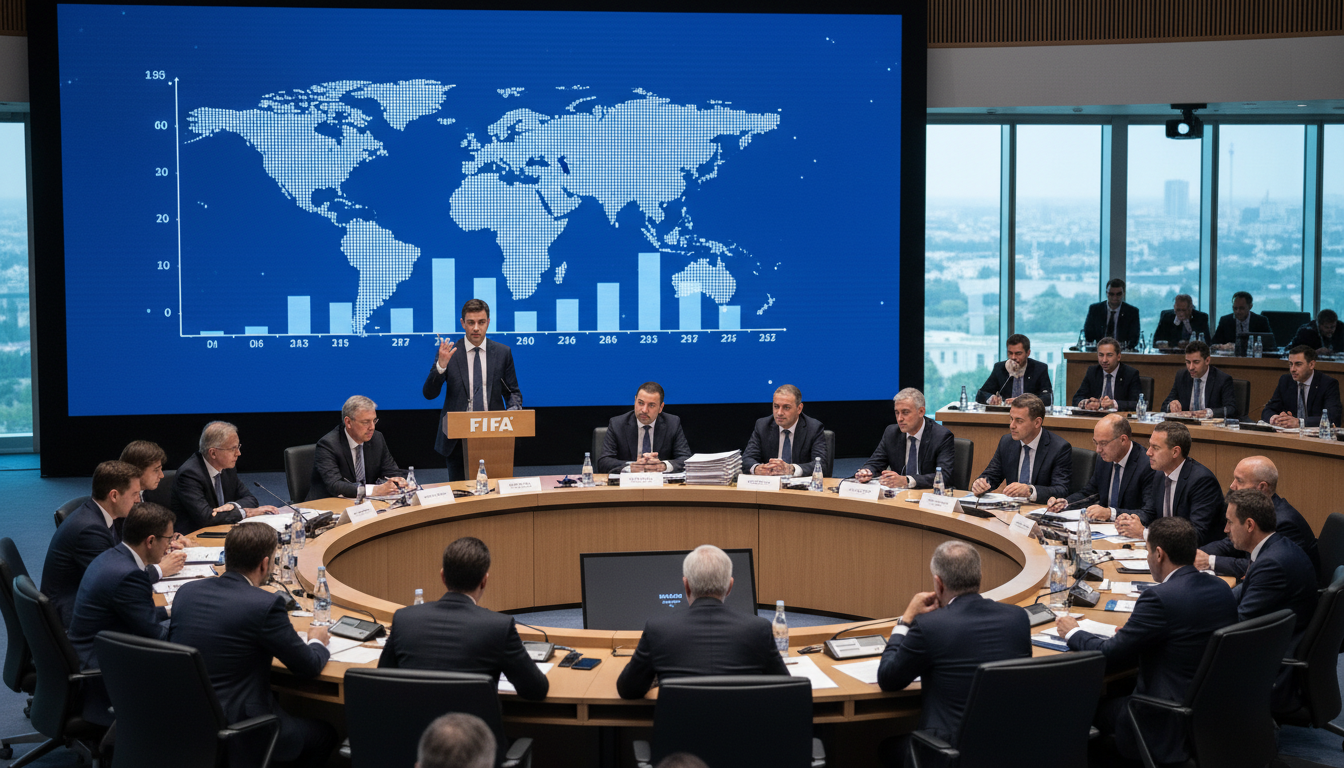
FIFA Congress in Vancouver Faces Cost and Logistics Questions Ahead of 2026 World Cup
FIFA delegates meet in Vancouver as mounting travel, tax and cost concerns shadow the 2026 World Cup; organisers point to the tournament’s commercial strength.


Opening session brings heightened scrutiny of tournament readiness
FIFA’s member associations convened in Vancouver on Thursday for their annual congress, a meeting that normally follows formalities but this year carries heightened scrutiny with the 2026 World Cup less than two months away. Delegates used the gathering to press organisers on a range of practical and financial concerns as the first 48-team edition prepares to unfold across the United States, Canada and Mexico from June 11 to July 19. The 2026 World Cup, the largest in the tournament’s history, has prompted intense discussion about travel logistics, differing tax systems and the cost burden placed on participating federations.
Several smaller and mid-sized associations signalled unease about the financial model for the expanded tournament, saying the additional matches and long-haul travel could erode any guaranteed revenue. European confederation officials told UEFA colleagues that national teams might struggle to break even unless they advance deep into the competition, underscoring a divide between commercial projections and on-the-ground realities. The Vancouver meeting served as a venue for those concerns to be aired publicly and for FIFA to present its case about the event’s commercial strength and mitigation measures.
Delegates gather in Vancouver amid operational briefings
The congress opened with detailed briefings on stadium readiness, match operations and security planning across the three host countries. Organisers emphasised that venue preparations had advanced and that legacy infrastructure in many host cities would reduce the need for new construction. Delegates were shown schedules and logistical frameworks intended to manage the complexity of simultaneous matches and progressions across multiple time zones.
Despite these reassurances, questions remained about the practicalities of team movements and fan travel between host cities in different countries. Delegations sought clarity on protocols for arrivals, training window allocations and the likely scale of time and distance teams will face during the group and knockout phases. Officials also requested clearer guidance on how FIFA intended to support federations that face disproportionate logistical demands due to geography or budget constraints.
Financial concerns loom for participating nations
A central theme at the congress was cost. Several associations, particularly from Europe and smaller confederations, expressed that travel expenses, accommodation and additional staffing for a longer tournament could push budgets into the red. Those representatives warned that revenue-sharing projections based on commercial income may not be sufficient to offset the upfront and ongoing costs of participation. The prospect that only teams progressing into later rounds would see meaningful returns heightened anxiety among federations with limited resources.
Delegates cited differing national tax treatments of prize money, appearance fees and reimbursements as a complicating factor when calculating net returns. Teams travelling to multiple countries face varying deductions and administrative burdens that can substantially reduce the cash received by a federation. For many associations that operate on tight financial margins, the net effect of the 2026 World Cup could influence planning for youth programmes, coaching staff and future international fixtures.
Logistics and travel challenges across three countries
The geographical reach of the 2026 World Cup presents a logistics puzzle unprecedented in scale for football’s flagship event. With venues spread across large distances in North America, teams and support staff may face long-haul flights between matches, short turnaround windows and differing entry requirements at international borders. Delegations questioned whether the current match schedule sufficiently accounts for recovery time and adequate training opportunities between fixtures.
Beyond team logistics, national federations raised concerns about the costs of moving equipment, medical staff and extensive delegation entourages across multiple host cities. Smaller federations in particular said they lack the in-house logistical capability to coordinate complex itineraries and would need clearer support from FIFA and confederations. Fan travel logistics were also discussed, with member associations pointing to potential ticketing, transportation and accommodation bottlenecks that could affect attendance and team revenue.
FIFA’s defense: commercial strength and mitigation measures
In response, FIFA representatives highlighted the unprecedented commercial footprint of the 2026 World Cup and argued that retained revenues would allow for broader distribution and support. FIFA officials said lucrative sponsorship, broadcast rights and ticket sales underpin the tournament’s financial model and create capacity to assist federations facing additional burdens. They reiterated that expanded global exposure and increased match guarantees could, in aggregate, produce higher long-term returns for many associations.
FIFA signalled that it was working on targeted measures to address specific federation concerns, including clearer guidance on tax treatment, travel coordination and potential support packages for teams with acute logistical challenges. Organisers also pledged to tighten communication lines with member associations to ensure practical issues are identified early and managed before teams travel. While those assurances were welcomed by some delegates, others said the details and scope of any support must be made explicit to allow federations to finalise budgets.
UEFA and European associations raise profitability worries
UEFA passed on concerns from several European member associations that the cost of participation could outweigh guaranteed revenues for their teams unless they advanced deep into the tournament. European federations noted that their clubs and domestic calendars already impose financial and scheduling strains, and that national associations face pressure to limit additional outlays. The potential for tax and administrative complexities when earnings are sourced across three jurisdictions added to the apprehension.
Some European delegates asked for contingency mechanisms to reduce financial risk, such as adjusted appearance fees, travel stipends or guaranteed minimum payments irrespective of progression. These proposals prompted debate among member associations that support the expanded format for its developmental and commercial benefits but worry about unintended consequences for federations with more modest budgets. The dialogue highlighted a split between the promise of a broader World Cup and the immediate fiscal realities facing many participants.
Countdown to kick-off: still time to resolve key issues
With the opening match on June 11 looming, the congress underscored that practical decisions and clear instructions are urgently needed. Delegations pressed for explicit timelines on how and when FIFA will publish detailed logistical protocols, tax guidance and any support measures. Many federations said they require this information within weeks in order to finalize travel plans, staffing and financial projections.
Organisers acknowledged the compressed timetable but stressed that the bulk of operational frameworks were already in place and that remaining clarifications were largely administrative. FIFA reiterated confidence in the host cities’ preparations and in cross-border coordination programmes designed to facilitate movement for teams and officials. Nonetheless, the tone of the discussions reflected a determination among member associations to secure tangible commitments rather than general assurances.
Stakeholder expectations and broader implications for the sport
Beyond immediate operational concerns, delegates discussed the broader implications of the 48-team format for international football. Proponents argue that the expansion promotes global inclusion, offers more nations the chance to compete on the biggest stage and creates greater commercial opportunities. Critics countered that the financial pressure on smaller federations may undermine long-term development unless carefully managed.
Member associations also debated how the tournament’s outcomes could influence future World Cup planning and revenue distribution models. The Vancouver discussions suggested that while the expanded field is likely to remain, its success will be judged not only by matchday crowds and TV ratings but by how well FIFA and confederations protect smaller participants from disproportionate costs. The need for transparent, equitable mechanisms to share benefits and mitigate burdens emerged as a recurring theme.
The congress in Vancouver offered a concentrated forum for airing these concerns and testing proposals ahead of the tournament, with delegates signalling they will monitor developments closely. The coming weeks are likely to reveal whether FIFA’s assurances translate into concrete support and whether federations can reconcile the promise of greater exposure with the practical realities of participation.
As preparations accelerate toward June, federations and organisers will need to convert discussion into action on travel, taxation and financial relief to ensure the 2026 World Cup delivers both sporting spectacle and equitable outcomes for all participating nations.