AFCON 2027: CAF and East African Hosts Launch Technical Push in Kampala under PAMOJA Framework
Uganda, Kenya and Tanzania meet in Kampala on April 22–23 for a CAF-led technical workshop to fast-track AFCON 2027 preparations and move from political commitments to operational delivery.


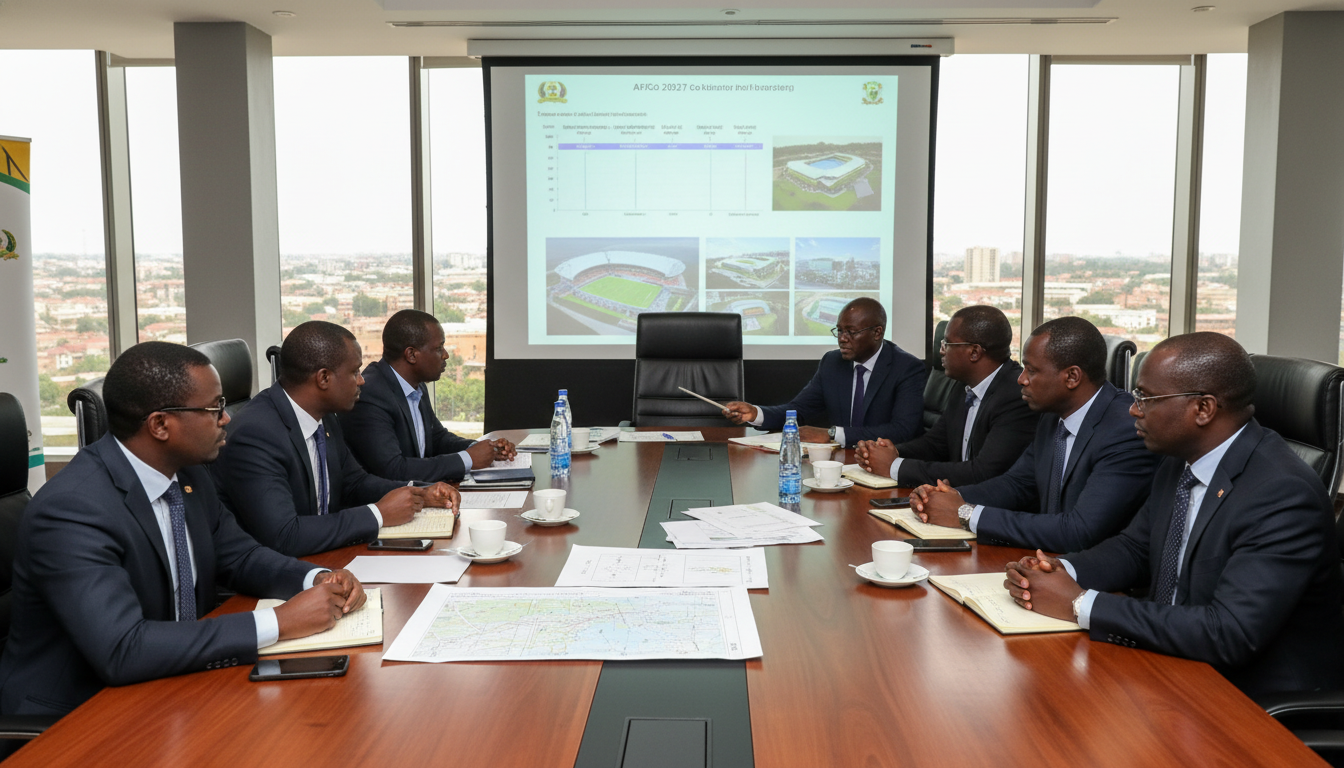
The Confederation of African Football (CAF) convened a two-day technical workshop in Kampala on April 22–23 to align co-hosting operations for AFCON 2027 under the PAMOJA framework. Representatives from Uganda, Kenya and Tanzania joined CAF officials and local organising committees to translate earlier political agreements into concrete delivery plans for the tournament. Local Organising Committee communications chair Dr. Dennis Mugimba described the meeting as a platform to agree the next phase of priorities rather than an inspection visit.
CAF and PAMOJA Hosts Begin Technical Coordination in Kampala
The Kampala workshop brought together technical leads across the three co-host nations to harmonise responsibilities and timelines for AFCON 2027. CAF made clear the intent was to define actionable workstreams and milestones that will guide the next 12–18 months of delivery. Officials emphasised coordination and clarity of roles as essential to avoiding duplication and slippage across borders.
Dr. Dennis Mugimba said the session is intended to produce a concise set of priorities for immediate implementation by CAF and the PAMOJA hosts. The meeting’s technical scope was designed to let specialists address operational challenges in security, stadium readiness, and event services. Attendees included ministers, LOC staff, security chiefs and private-sector representatives tasked with implementing the agreed workplans.
Focus Areas: Security, Infrastructure, Procurement and Finance
Organisers framed the Kampala meeting as a technical coordination exercise centred on discrete functional areas rather than a facilities inspection. Key topics on the agenda included security architecture, stadium and training infrastructure, procurement processes, financial management, media operations, ticketing systems and commercial activation. The prioritisation reflects the multifaceted nature of modern tournament delivery and the need to synchronise systems across three national jurisdictions.
CAF and host governments signalled the importance of integrated planning for emergency response, venue security, and cross-border information sharing. Procurement and finance sessions focused on ensuring competitive tendering and predictable disbursement schedules so contractors and suppliers can meet compressed timelines. Media and commercial teams used the forum to map broadcast, sponsorship and ticketing responsibilities that affect revenue and fan experience.
Uganda Pledges UGX 130.4 Billion for Training Facilities
Uganda has committed UGX 130.4 billion to refurbish and upgrade eight training facilities located in Hoima, Masindi, Lira, Gulu and Kampala. The works are to be fast-tracked in part through the Uganda People’s Defence Forces Engineering Brigade, an approach Kampala has used previously to accelerate public infrastructure projects. Four of the identified sites are scheduled for handover to the engineering brigade by the end of April, according to LOC planning documents.
Using military engineering units can shorten delivery cycles, but organisers acknowledged the approach also requires tight coordination with civilian contractors and oversight bodies. Upgrading training venues is a lower-profile but essential component of CAF compliance, with delayed completion at training sites capable of creating ripple effects across team logistics and accreditation.
Accountability and Procurement Rules Under Scrutiny
Large public commitments to tournament infrastructure have placed procurement and fiscal oversight under closer scrutiny. Uganda’s expenditures for AFCON 2027 must conform to the Public Finance Management Act and the Public Procurement and Disposal of Public Assets Act, which set standards for transparency, competitive procurement and value-for-money. Finance sessions at the Kampala workshop emphasised auditability and the need for clear documentation at every stage of contracting.
Stakeholders warned that compressed timelines increase the risk of procedural shortcuts unless oversight mechanisms are reinforced. Civil society monitors and parliamentary committees are expected to watch disbursement plans closely, while host authorities must balance speed with compliance to preserve public trust and protect the tournament’s legacy.
Tourism and Hospitality Certification Raises Capacity Questions
The AFCON 2027 organising team projects a substantial tourism uplift, with LOC estimates indicating as many as 500,000 visitors could travel to Uganda during the tournament window. Organisers have made it clear that only accommodation providers licensed through the Ministry of Tourism, Wildlife and Antiquities and certified by the Uganda Tourism Board will be recognised as official suppliers for visiting teams, officials and international fans. LOC officials stressed that proprietors must complete certification through the Uganda Tourism Board rather than through event organisers.
Tourism policy experts highlighted the certification requirement as necessary for quality assurance but warned it exposes structural weaknesses in the accommodation sector. Uganda’s Tourism Act of 2008 provides the regulatory framework for licensing and classification, yet enforcement remains uneven outside major urban centres. Observers cautioned that if certification processes are not accelerated and scaled, the country risks either excluding informal capacity that could relieve pressure or permitting uncertified providers that undermine service standards.
Digital Systems, Cashless Payments and Cross-Border Security
Modern tournament delivery now relies heavily on resilient digital infrastructure, and AFCON 2027 planning in Kampala reflected that reality. Discussions covered cybersecurity, advanced ticketing platforms, cashless payment systems, and the capacity to support high-quality live streaming and broadcast operations. Event technology teams stressed the need for interoperable systems across Uganda, Kenya and Tanzania to ensure seamless fan journeys and reliable revenue tracking.
Integrated security systems and cross-border information sharing were also prioritised under the tri-nation model. Coordinated visa arrangements, biometric accreditation, and shared intelligence capabilities were presented as necessary measures to manage large-scale crowd movements and deter potential security threats. Organisers agreed that technology investments would be as important to the tournament’s reputation as physical upgrades to stadiums and training sites.
Timeline Pressures and Operational Risks with 14 Months to Go
With roughly 14 months remaining until AFCON 2027, the Kampala meeting underlined how little margin remains for delay. Sports logistics experts warned that many international fans begin booking six to twelve months before major events, putting pressure on hosts to finalise ticketing, accommodation listings and travel corridors. Any delays in critical infrastructure, certification or procurement could compress operational testing windows and limit the ability to conduct full-scale rehearsals.
Regional analyst assessments flagged past African tournaments where last-minute construction or late accreditation hampered delivery and reputation. Workshop participants identified contingency measures and a tighter reporting cadence to mitigate these risks, while CAF representatives indicated that follow-up technical visits and milestone reviews will be scheduled to monitor progress.
The Kampala technical meeting represents a transition from high-level commitments to targeted action for AFCON 2027, but success will depend on harmonised implementation across three sovereign hosts and on meeting legal and logistical standards under tight deadlines.