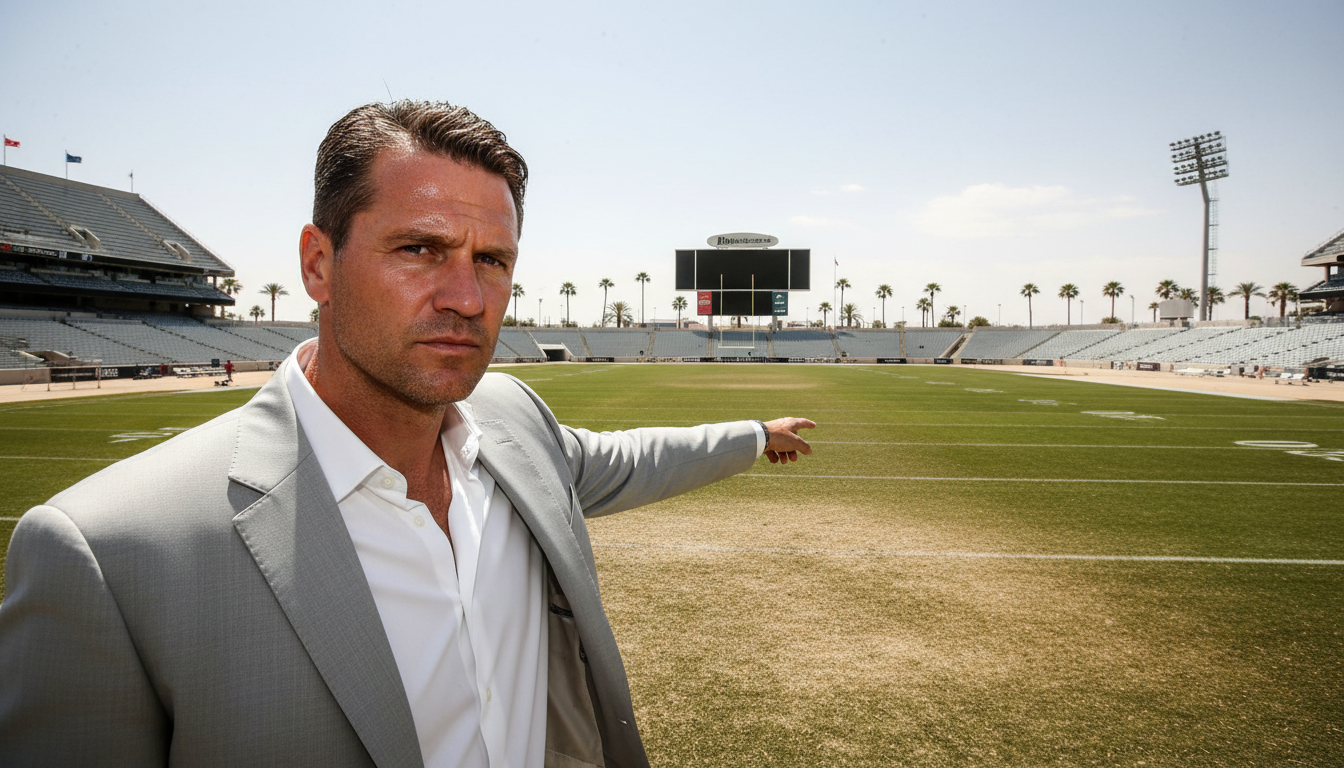
Stefan Effenberg Revisits 1994 Dallas Expulsion and Warns on 2026 World Cup Heat
Stefan Effenberg recalls the 1994 Dallas incident and cautions that extreme heat will be a factor for teams at the expanded 2026 World Cup hosted by the US, Mexico and Canada.


Stefan Effenberg on his 1994 Dallas exit and the 2026 World Cup.
Stefan Effenberg has once again brought attention to the sweltering conditions that shaped one of the most controversial moments of his career, using the episode to highlight climate and player welfare questions ahead of the expanded 48-team World Cup in 2026. The former Germany midfielder, sent home from the 1994 finals after a confrontation with fans, pointed to ground temperatures in Dallas that reached roughly 49°C as a critical factor in his reaction and in the wider challenges players face in extreme heat. Effenberg said the experience informed his view that the United States, alongside Mexico and Canada, must account for severe local climates when staging the tournament. His comments have reignited debate over scheduling, venue readiness and medical preparations as organizers and national teams plan for the tournament.
Effenberg’s Dallas incident revisited
Stefan Effenberg’s expulsion from Germany’s 1994 World Cup squad remains a notorious episode in tournament history. Substituted during a match against South Korea, Effenberg reacted to jeering supporters and was quickly removed from the squad by team authorities.
In interviews he has repeatedly linked the outburst to extreme heat and humidity, arguing that conditions in Dallas were far removed from what European players routinely experience. His recollection underscores how environmental stressors can affect temperament and performance at the highest level of the game.
Heat and player performance: physiology and precedent
Extreme heat is widely acknowledged by sports scientists to impair sprint capacity, decision-making and recovery across 90 minutes and into extra time. When core body temperature rises and hydration levels fall, players commonly experience reduced cognitive sharpness and increased fatigue, which can alter tactical execution and increase injury risk.
Effenberg cited recent high-profile matches played in hot, humid conditions as contemporary evidence that organizers must plan for physiological impacts. Teams arriving from temperate climates may struggle without sufficient acclimatization time, targeted training, and tailored recovery protocols.
Assessing North American venues for the 2026 expanded World Cup
The 2026 World Cup will use a diverse slate of stadiums across three countries, exposing teams to a wide range of climates and altitudes. Mexico’s higher-altitude venues and parts of the southern United States present different physical challenges than coastal North American cities and Canadian sites closer to temperate zones.
Stadium architecture and local planning will be critical variables, with venues that feature shade, cooling systems and evening kick-off windows better positioned to mitigate heat exposure. Effenberg acknowledged that infrastructure can offset many risks, but stressed that on-the-ground temperatures and humidity remain decisive factors for player comfort and performance.
Lessons from recent Stateside competitions
Recent international and club events played in the United States have provided organizers with operational experience relevant to 2026. Those tournaments exposed gaps in cooling logistics, hydration management and scheduling flexibility when matches were staged during peak daytime heat.
Effenberg referenced these tournaments as practical case studies, arguing that incremental improvements in medical staffing, pitch maintenance and match timing could make a meaningful difference. He said lessons learned at the club level should be scaled up for an event the size and complexity of the World Cup.
Medical protocols, scheduling and tournament governance
Medical teams and governing bodies have increasingly emphasized heat illness prevention as part of event planning, introducing hydration breaks and standardized risk assessment tools. Tournament organizers will need to combine those protocols with locally informed scheduling to minimize exposure during the hottest hours.
Effenberg urged national associations to prioritize acclimatization camps and to collaborate with host cities on practical mitigation measures. He noted that while professional clubs frequently employ advanced recovery technology, national teams often have shorter preparation windows that make coordination with venue managers and medical staff essential.
Practical steps for teams and host cities
Practical preparations include staggered kick-offs, ensuring shaded training pitches, and deploying medical teams trained in exertional heat stroke recognition and treatment. Technology such as cooled substitutes’ benches, misting stations and monitored hydration protocols can reduce risk and maintain competitive integrity.
Effenberg suggested that teams should arrive earlier in the host cities most likely to reach extreme temperatures, using progressive exposure to adjust training loads and recovery routines. He emphasized that planning must be evidence-based and tailored to the microclimates of each venue rather than relying on broad assumptions about regional weather.
Balancing spectacle and safety in a 48-team format
The expanded 48-team format brings more matches, more travel and more logistical complexity, heightening the importance of consistent safety standards across host cities. Organizers must therefore reconcile commercial and broadcast demands with player welfare imperatives when setting match times and allocating venues.
Effenberg, speaking from personal experience, argued that the spectacle of large crowds and vibrant atmospheres should not come at the expense of effective heat management. A World Cup that showcases athletic excellence depends as much on competent preparation and governance as it does on star talent and fan engagement.
Preparations for the 2026 World Cup will be judged not only on stadium capacity and broadcast reach but on how well hosts protect competitors from known environmental risks. Stefan Effenberg’s reminder of his Dallas experience serves as a timely prompt for teams, federations and local organizers to align around practical measures that preserve both spectacle and safety.