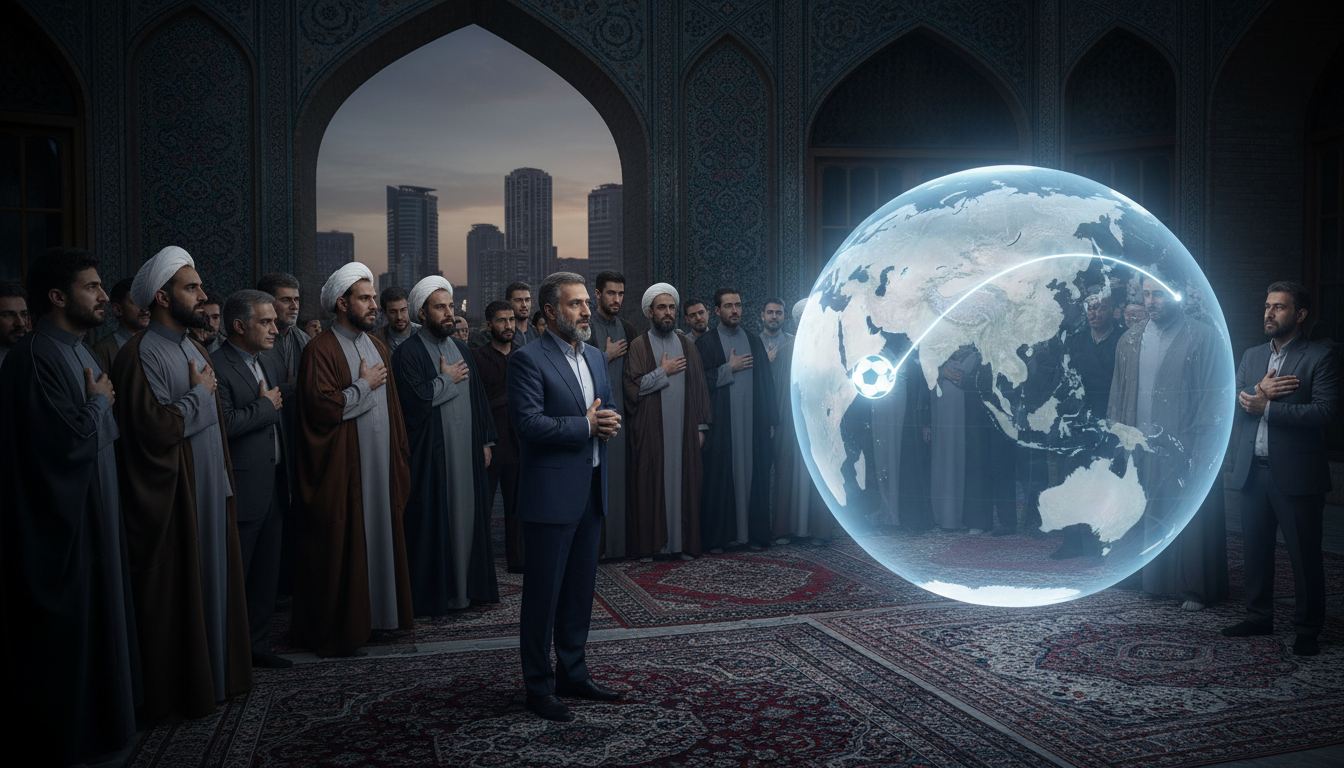
Iran World Cup matches relocation hangs on FIFA reply, Iran’s sports minister says
Iran seeks FIFA response on relocation of World Cup matches from the US to Mexico; government will decide participation only after FIFA responds.


Government will wait for FIFA decision before confirming World Cup participation
Iran’s Minister of Sport, Ahmad Donyamali, said the government will decide whether the national team takes part in the World Cup only after receiving a formal response from FIFA on a request to relocate matches.
Donyamali made the comment in an interview with Turkish state news agency Anadolu, reiterating that the request to move Iran’s games from the United States to Mexico remains active.
The minister tied Iran’s participation directly to FIFA’s handling of the relocation request, signaling that no final travel or squad decisions will be taken until an official reply is issued.
This statement places FIFA’s response at the center of Tehran’s decision-making ahead of the tournament.
Federation requests move of three group-stage matches to Mexico
Iran’s football federation (FFIRI) formally asked FIFA to move the team’s three group-stage matches out of venues in the United States and into Mexico.
FFIRI cited concerns over American military involvement alongside Israel in recent strikes that have intensified an ongoing regional conflict.
The federation said the relocation request was motivated by security concerns and the need to protect players, staff and supporters from potential spillover risks.
FFIRI officials have been in discussions with FIFA since the end of those initial requests, seeking clarity on timing and possible alternative stadiums in Mexico.
FIFA president said Iran would play as scheduled
FIFA president Gianni Infantino last week publicly stated that Iran would play their matches as scheduled, indicating the governing body’s current position.
Infantino’s comments suggested FIFA was committed to the match calendar and the agreed host venues unless a formal reassessment was completed.
Donyamali contradicted that finality by saying Iran would only confirm participation “if accepted,” underscoring a gap between Tehran’s position and FIFA’s public messaging.
The exchange sets up a potential standoff between FIFA’s tournament administration and Iran’s government policies.
Iranian sports ministry enforces travel ban to countries it deems hostile
Iran’s sports ministry has issued a blanket ban on national and club teams traveling to countries it considers hostile, and that restriction remains in place until further notice.
The travel ban was cited by officials as one of the reasons for seeking the relocation of World Cup matches out of the United States.
Such ministry-level directives complicate logistics for the national team, making any decision contingent not only on FIFA’s reply but also on potential adjustments to the travel policy.
The ministry’s position represents a domestic security and diplomatic stance shaping Iran’s engagement with international sport.
Practical and logistical hurdles of changing venues on short notice
Relocating group-stage matches from the United States to Mexico would present immediate logistical and operational challenges for organizers, host cities and participating teams.
Venue availability, ticketing transfers, broadcasting rights and transportation for thousands of supporters are among the practical issues that must be addressed if FIFA were to grant a relocation.
Any move would also entail rapid coordination with local authorities in Mexico, alongside assurances on stadium readiness, security arrangements and accommodation capacity.
Tournament organizers would need to weigh those demands against precedent, tournament integrity and contractual obligations with the current hosts.
Diplomatic context and the tournament’s broader security calculus
Iran’s relocation appeal is embedded in a wider diplomatic and security context that has seen military actions intensify in the region and draw international attention.
The federation’s appeal highlighted American military involvement alongside Israel in strikes that sparked the current conflict, a concern that Tehran says directly affects the safety calculus for playing in U.S. venues.
For FIFA and host nations, the decision must balance the governing body’s mandate to stage matches as scheduled with legitimate security and diplomatic concerns raised by a competing federation.
How FIFA adjudicates this request will likely influence relations between national federations and the sport’s governing body in future instances where geopolitical tensions intersect with tournament hosting.
Possible pathways and precedents if FIFA considers relocation
If FIFA accepts Iran’s request to move matches to Mexico, organizers would need to set out a clear timetable for venue assignments and operational handovers.
Past instances of venue changes on short notice in global tournaments have required extraordinary coordination and often involved concessional arrangements for stakeholders.
Alternatively, if FIFA refuses the request, Iran faces a choice between complying with the current schedule or risking non-participation, which could trigger disciplinary or sporting consequences under FIFA regulations.
Either outcome would carry implications for competitive fairness in the group, supporter travel, and the image of the tournament as a global, politically neutral sporting event.
FIFA’s forthcoming response will determine the immediate fate of Iran’s participation and the feasibility of any venue change.
Iran’s request for a relocation of World Cup matches from the United States to Mexico remains unresolved, and Tehran has made clear that its national team’s participation depends on a formal answer from FIFA.
As discussions continue, tournament organizers, the federation and state authorities face a narrow window to reconcile security concerns, logistical realities and the governing body’s tournament schedule.
The stakes include not only the practical arrangements for three group-stage fixtures but also broader questions about how international sport navigates geopolitical crises.
For now, Iran and FIFA are each awaiting the other’s next move, with the future of the team’s World Cup campaign contingent on the response yet to be delivered.