PSG vs Bayern: Luis Enrique says PSG must score at least three in Allianz Arena return after 5-4 semi-final thriller
Luis Enrique warns PSG must score at least three in PSG vs Bayern semi-final after dramatic 5-4 first-leg win, setting up a tense Allianz Arena return.
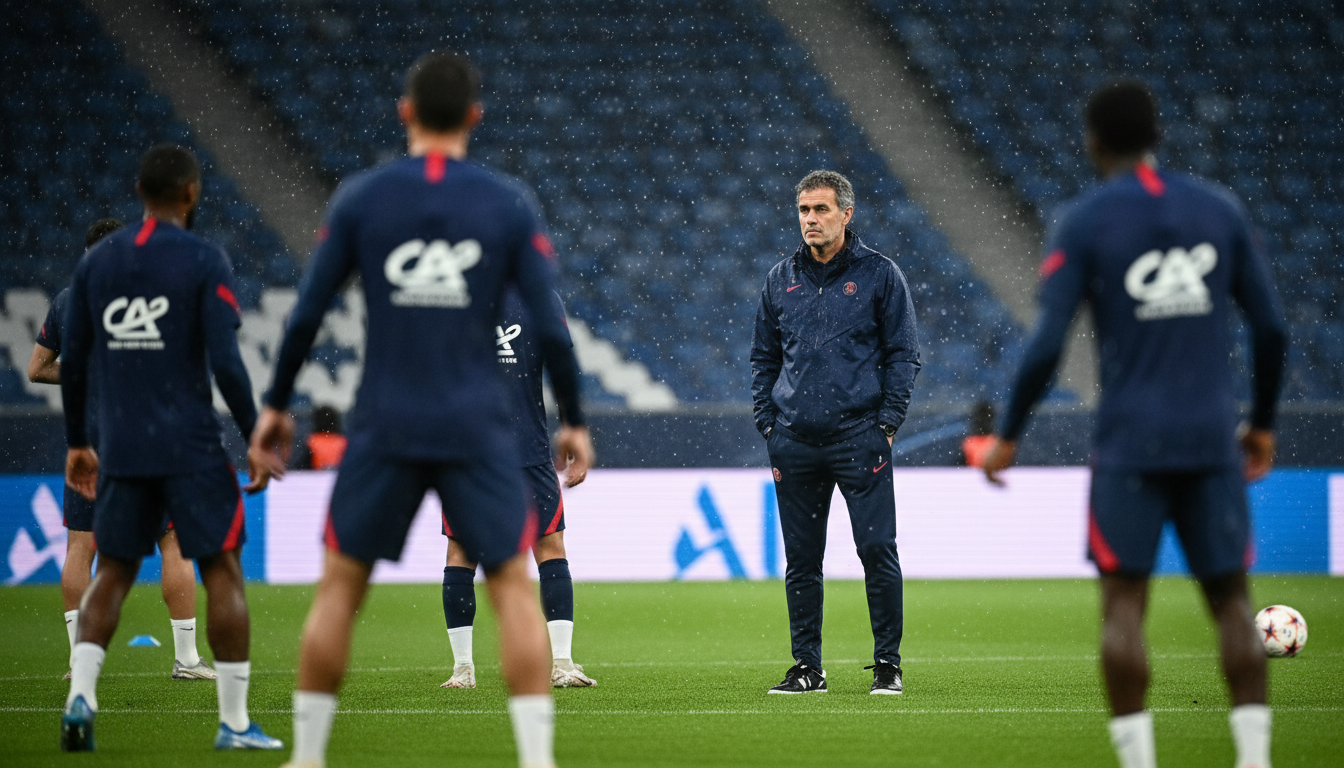
Paris Saint-Germain coach Luis Enrique acknowledged that Tuesday’s 5-4 victory leaves the tie far from decided and that PSG will probably need multiple goals in the return leg to guarantee a place in the Champions League final. The coach, recalling last season’s final success, told his staff he expects his side to have to “score at least three” in Munich. The headline PSG vs Bayern clash produced a high-octane first leg and now shifts to Bayern’s Allianz Arena with everything to play for.
Luis Enrique sets explicit target for the return trip
Luis Enrique made clear the coaching staff has already run the numbers and concluded PSG cannot rely on a slim margin to see them through. He asked his assistants how many goals would be needed and the consensus was that scoring three in Munich would give PSG the best chance of advancing. Enrique framed the task as a test of temperament and offensive execution rather than a call for reckless attacking. His message was both pragmatic and confident, urging his players to treat the second leg as an opportunity to complete the job.
Five-goal spectacle at Parc des Princes leaves tie wide open
The first leg produced nine goals and momentum swings that few predicted, turning the tie into one of the most entertaining semi-finals in recent memory. PSG emerged with a one-goal advantage but conceded four times, leaving defensive questions that will have to be addressed before the trip to Germany. Players on both sides showed attacking intent from the first whistle, creating numerous chances and forcing either coach into reactive substitutions. The scoreline guarantees the second leg will be played at a fever pitch, with both sides aware that a single lapse could decide the tie.
Historical context: most prolific Champions League semi-final since 1960
Tuesday’s nine-goal encounter stands out in the European Cup era; it was the most goals scored in a semi-final tie in decades. The last semi-final as prolific was in 1960 when Eintracht Frankfurt won 6-3 away to Rangers before suffering a heavy defeat in the final. That historical parallel underscores how rare and dramatic such open, goal-heavy knockout ties have become in modern European competition. For PSG and Bayern, the match will be remembered as one that defied typical semi-final caution and instead celebrated attacking football at the highest level.
Bayern’s home advantage and likely tactical shifts
Bayern Munich will return to their stadium with the weight and warmth of home support behind them, a factor Luis Enrique explicitly acknowledged when discussing the second leg. The Allianz Arena has long been a fortress where Bayern’s intensity and pressing game can unsettle visiting defenses. Bayern’s tactical approach is expected to emphasize quick transitions and width to exploit spaces left by PSG’s forward-leaning setup. PSG, for their part, must balance the need to score with the discipline required to limit Bayern’s counter-attacks and protect their fragile defensive shape.
Key personnel questions and match-up considerations
Both teams face decisions about personnel and formation ahead of the return leg, with fitness, form and tactical match-ups shaping selection. PSG’s attacking resources, proven in their 5-0 final triumph last season, will again be under scrutiny to produce goals away from home. Bayern will need to address defensive lapses that allowed five goals in the first leg while finding ways to stretch PSG’s back line. Midfield control will be decisive; whichever side secures possession and tempo early in Munich could dictate how the rest of the match unfolds.
Photo moment underlined tactical consequences
A striking image from the first leg captured a Bayern attacker bearing down on PSG’s midfield, emblematic of the openings that appeared repeatedly in the tie. That moment, frozen in the match gallery, highlighted how individual duels and split-second decisions shaped the scoreline. Analysts will pore over such sequences to identify recurring vulnerabilities and advantages for the second leg. Coaches on both sides will use visual evidence alongside match data to refine pressing triggers, defensive positioning and transitional patterns.
What PSG’s recent European pedigree means for the tie
PSG arrive in Munich with the benefit of recent Champions League success, having secured the trophy in a comprehensive final performance last season. That experience gives them a psychological edge in terms of handling pressure and approaching knockout matches with a clear game plan. Still, past triumphs do not guarantee future results; Bayern’s pedigree at home and their capacity to respond under pressure make the return leg a genuine toss-up. PSG must translate confidence from previous victories into controlled aggression and avoid being drawn into chaotic exchanges that could favor Bayern.
Coaching chess and second-leg scenarios
The tactical battle between the two managers will be as influential as individual performances on the pitch in determining who reaches the final. Adjustments in pressing intensity, full-back positioning and midfield compactness will be central talking points in the build-up. Substitutions are likely to be used more strategically in Munich, with both benches capable of altering the match’s complexion late in the game. The manager who better anticipates and counters in-game shifts will increase his team’s chances of taking the decisive advantage.
PSG and Bayern face a high-stakes second leg that promises to be tactical, tense and entertaining, with Luis Enrique’s blunt assessment setting the tone for PSG’s approach in Munich. The tie remains finely balanced, and both clubs enter the Allianz Arena with clear work to do if they are to secure the place in the Champions League final.