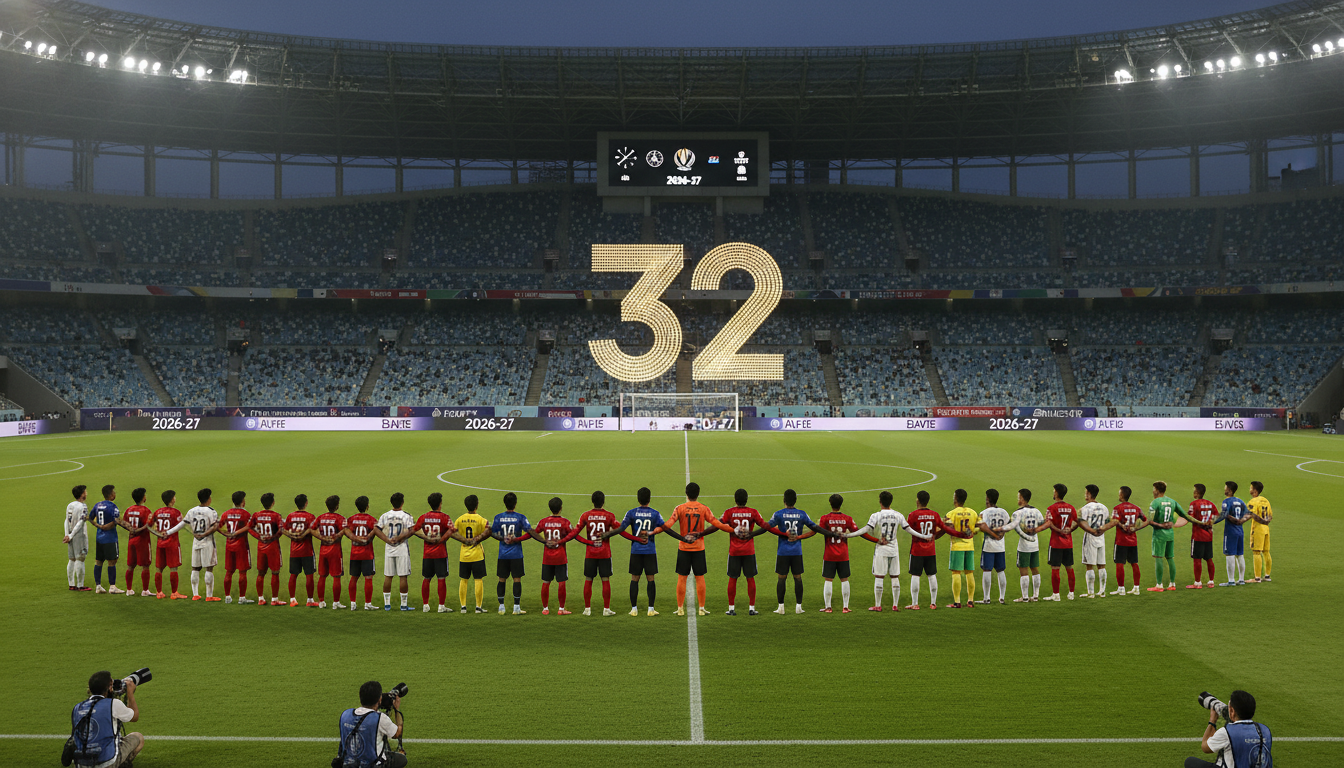
AFC Champions League Elite expansion to 32 teams recommended for 2026–27
AFC Champions League Elite expansion recommended to increase league stage from 24 to 32 teams, split 16-16 across East and West from 2026–27 season.


AFC recommends 32-team expansion
The Asian Football Confederation’s Competitions Committee has recommended expanding the AFC Champions League Elite from 24 to 32 teams, with the proposal aimed at taking effect from the 2026–27 season. The committee described the change as a “landmark expansion” intended to broaden participation and strengthen the competition’s structure. (the-afc.com)
The recommendation was announced on April 14, 2026, following a series of reviews of club tournaments and qualification pathways across the confederation. The proposal must still be ratified by the AFC Executive Committee before it becomes binding. (the-afc.com)
Officials said the move forms part of broader reforms to promote inclusivity and to reshape how clubs qualify for the knockout stages of Asia’s premier club competition. The committee indicated changes would be coupled with adjustments to competition regulations and scheduling. (the-afc.com)
Regional split and format changes
Under the recommendation, the expanded league stage would be divided evenly between the East and West regions, with 16 clubs competing in each zone. The AFC argued that maintaining the regional split preserves travel balance and regional representation while allowing more member associations to participate at the highest club level. (the-afc.com)
The proposed format would increase the number of league-stage matches and reshape progression to the knockout rounds, though the committee has not yet published the finalised match calendar or exact qualification percentages. The AFC indicated these operational details will be finalised as part of the regulation updates ahead of the 2026–27 cycle. (the-afc.com)
Media and analysts have observed that expanding to 32 teams mirrors recent global trends toward larger club tournaments and could create additional commercial and broadcast opportunities across Asia. Proponents argue the change will expose more clubs to higher-level competition and incentivise domestic investment. (sports.ndtv.com)
Implications for Kitchee and Hong Kong clubs
The recommendation has generated immediate uncertainty for Hong Kong’s Kitchee SC, who clinched the Hong Kong Premier League title with four matches remaining following a 2-0 win over BC Rangers. The club had been preparing for a slot in the second-tier AFC Champions League Two, and both Kitchee and the Hong Kong Football Association say they are awaiting clarification from the AFC on how expansion will affect qualification. (scmp.com)
Kitchee last played in Asia’s top-tier competition during the 2023–24 campaign, finishing at the bottom of their group in the final season before the AFC’s recent tournament revamp. Over the subsequent two seasons Hong Kong qualifiers have settled for ACL2 places, making the potential elevation back to the Elite tier especially consequential for the club and local supporters. (scmp.com)
A club spokesman said Kitchee had not yet received formal communication from the continental governing body about slot reallocation, while a Hong Kong FA representative confirmed the association was also awaiting official guidance. That lack of clarity is representative of many smaller member associations that may benefit from redistribution of berths under the new arrangement. (scmp.com)
What could change in qualification and slots
The expansion is expected to prompt a review of how berths are allocated among AFC member associations, with the Competitions Committee signalling a “more rigorous qualification pathway” to the knockout stages. Football federations across Asia are likely to lobby for additional direct spots or revised play-off routes for their domestic champions. (the-afc.com)
Sources close to the process have suggested the AFC may use a revised slot distribution matrix that balances sporting merit with continental representation, potentially giving mid-ranked associations a clearer route into the Elite competition. Any move to widen participation would influence domestic calendars, club licensing requirements, and preparations for continental travel. (sports.ndtv.com)
The second-tier AFC Champions League Two is also likely to see adjustments to preserve competitive structure and to ensure pathways between the two competitions remain meaningful. The AFC has previously indicated that ACL2 winners can gain play-off access to the Elite tier, and that relationship is expected to be maintained or strengthened under the new system. (en.wikipedia.org)
Stakeholder reactions and commercial considerations
AFC officials framed the expansion as both a sporting and commercial decision, arguing more high-profile matches will boost broadcast value and sponsor interest across the region. Confederation leaders have emphasised the long-term aim of developing club football in emerging markets and increasing competitive parity. (the-afc.com)
Some national associations and established clubs have expressed cautious optimism, noting the potential benefits of increased international exposure for players and enhanced revenue streams. Others have raised practical concerns about fixture congestion, travel logistics, and the readiness of certain clubs to meet licensing and competitive standards at the Elite level. (sports.ndtv.com)
Commercial partners and broadcasters will be closely watching the ratification process, as a 32-team Elite competition would create a larger inventory of rights and sponsorship inventory across both East and West markets. The timing of final approval and the associated calendar decisions will be critical for negotiating deals for the 2026–27 season. (the-afc.com)
Next steps and timeline to ratification
The Competitions Committee’s recommendation is not final; it must be endorsed by the AFC Executive Committee to be scheduled into the official 2026–27 competition regulations. The AFC has signalled that detailed regulations, including slot allocation and match scheduling, will be published once the executive body completes its review. (the-afc.com)
Member associations and clubs should expect an official confirmation window in the months ahead, after which federations will need to adjust their domestic calendars and licensing processes. The lead time is intended to give clubs and national leagues the opportunity to prepare for the expanded format and any new qualification mechanisms. (the-afc.com)
Observers say the coming weeks will be decisive for teams on the cusp of upgrading from ACL2 status, as the final ratified structure will determine whether domestic champions from smaller markets gain direct entry or have to navigate additional qualifying rounds. The AFC’s choices will shape club planning across the continent for the next cycle. (the-afc.com)
The AFC’s recommendation marks a significant potential shift in Asian club football, promising greater participation but posing logistical and sporting questions that now rest with the executive decision-makers.