Venezuela Copa América: Depleted Vinotinto Fight Back to Draw 2-2 With Ecuador After Late Equaliser
Venezuela Copa América – A makeshift Venezuela side produced a stirring 2-2 draw with Ecuador as Ronald Hernández’s 91st‑minute header earned La Vinotinto a dramatic late equaliser in a match that showcased resilience amid severe squad shortages.
Coach José Peseiro’s team, missing 18 players because of coronavirus and injuries, relied on determination, tactical adjustment and an inspired debut from Edson Castillo to secure a result that has energized supporters.

Peseiro fields a shorthanded squad and vows full commitment
José Peseiro arrived at the Copa América with practically a skeleton crew, forced to name a roster that omitted ten players sidelined by positive COVID tests and eight more ruled out through injury.
Faced with limited options, the coach publicly adopted a simple promise that galvanized the squad and fans alike: an all‑out effort often summarized by a pledge to give “300%.”
That commitment became the practical foundation for Venezuela’s approach, with selection and tactics driven less by ideal scenarios and more by who was available to play on the night.
The result against Ecuador reflected a team molded by necessity, one that substituted cohesion for intensity and relied on collective work rate to offset absences of established stars.
Edson Castillo’s debut changes the game
Edson Castillo, making his full international debut at 27, emerged as the pivotal figure in Venezuela’s comeback with a goal and an assist that rewrote the match’s script.
Castillo had spent most of the first half integrating into a compact midfield, but his impact intensified after the break when he climbed highest to head home an equaliser and later delivered the pass that set up the stoppage‑time leveller.
His performance drew immediate recognition for its influence on the game; the midfielder combined positional intelligence with decisive finishing in moments that tested both composure and belief.
Castillo’s arrival into the starting eleven underlined Peseiro’s readiness to trust newcomers and to unearth solutions from a squad that has had little opportunity for conventional preparation.
Defensive reorganisation and leadership at the back
José Manuel Velázquez returned to the starting line‑up and assumed responsibility for organising a five‑man defensive block, providing structure in a backline that faced sustained pressure.
Velázquez’s experience proved important in marshaling a defence that had to compensate for midfield rotations and the occasional lapse in timing caused by the team’s makeshift formation.
The system required clear communication and physical commitment, with defenders frequently stepping into midfield to help stem Ecuador’s transitional thrusts.
That defensive discipline, despite some early disarray and contentious officiating, kept Venezuela within striking distance and allowed the team’s opportunistic offensive moments to matter.
Midfield reshuffle and tactical improvisation
Peseiro deployed a midfield built around defensive operators repurposed to wider roles, with players such as Junior Moreno, Cristian Cásseres Jr. and Bruno “Brujo” Martínez covering substantial ground.
The initial approach aimed to disrupt Ecuador’s midfield rhythm by crowding central spaces and forcing the visitors to play on the flanks, even if that meant some players were out of their conventional positions.
As a consequence, emphasis fell on transitional counters and set‑piece threats, areas where Castillo and the full‑backs could influence proceedings once possession was recovered.
The strategy required sustained stamina and tactical discipline; it also highlighted the coaching staff’s pragmatic willingness to adjust roles to fit the personnel available.
Late drama: Hernández’s header sparks nationwide celebration
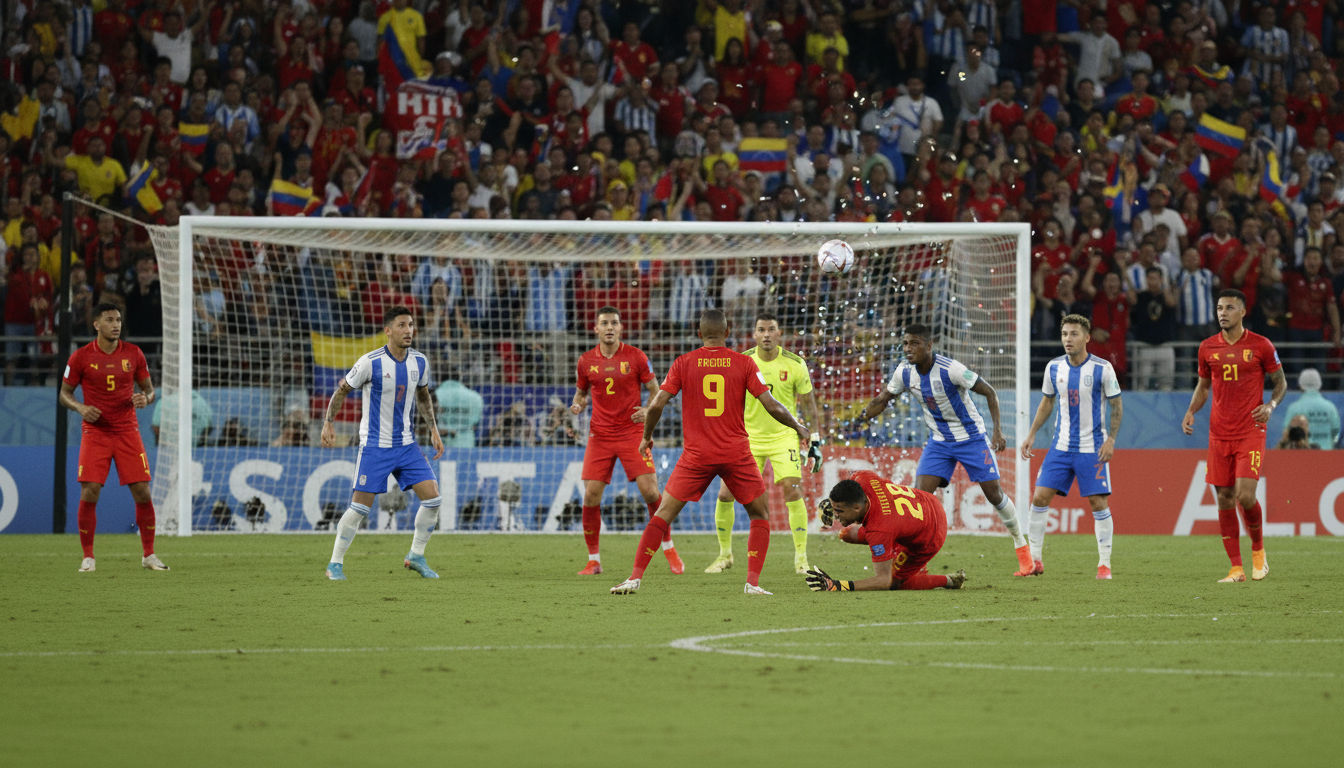
With the match appearing to slip away after Ecuador regained the lead through a swift counter in the 71st minute, Venezuela’s substitutes and the remaining starters refused to relent.
In stoppage time, Castillo’s vision and awareness created one final opening when he played the ball back into space for Ronald Hernández to make a timed run into the box.
Hernández met the cross with a precise downward header that found the far corner and secured a 2-2 draw, producing an emotional release among players and supporters alike.
The equaliser not only salvaged a point but also served as a symbolic vindication of the squad’s effort and a reminder that resilience can overturn the numerical and preparatory disadvantages the team faced.
Fan reaction and the rise of a unifying slogan
Throughout the tournament run, Venezuelan supporters have coalesced around two phrases that came to embody the team’s spirit: a coach’s vow of extreme effort and a popular expression of faith.
“Mano, tengo fe” — a colloquial declaration of belief — evolved from a social media meme into a rallying cry as fans embraced the team’s underdog status and celebrated moments of resilience.
The slogan captured a wider mood in a nation that found in the team’s performances both diversion and inspiration, with social channels amplifying scenes of jubilation after the late equaliser.
That public response has reinforced a narrative of unity and hope around La Vinotinto, providing momentum that extends beyond the single result.
Implications for Venezuela’s Copa América campaign
The draw against Ecuador offers Venezuela a valuable point and a psychological lift at a stage when the squad could have been demoralised by absences and limited preparation.
For Peseiro, the result validates the decision to back lesser‑known players and to prioritise intensity and tactical pragmatism over aesthetics.
Moving forward, the challenge will be to maintain fitness, manage a compressed schedule and extract consistent performances from a group that lacks depth.
If the team can convert spirit into results, the makeshift unit still has routes to influence its group and to build credibility for the tactical concepts the coach is attempting to impose.
Venezuela’s late rescue against Ecuador underlines the dual reality of modern tournament football: talent matters, but so do adaptability and belief.
In a competition where circumstances can change rapidly, the Vinotinto’s response to adversity — a blend of organisational discipline, timely individual contributions and sheer determination — offers a compact case study in how underdog teams can still shape their destiny.
The performance also places a fresh spotlight on players like Castillo and Hernández, whose decisive moments could prompt further selection debates and tactical tweaks as the tournament progresses.
For now, Peseiro and his squad leave the pitch with a point secured and a country briefly consoled by the sight of its team refusing to surrender.